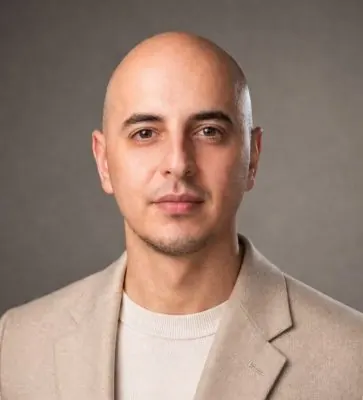
The CFO EffectFounding cohort with Axile Talout

AI Operating Systems for CFOs · Founding cohort

Leave with an AI system that builds your dashboard, your executive deck and your scenario model.

Two live days with a sitting CFO. You watch the whole system built, then take it home, ready to load into Claude and run on your own numbers. The hours it gives back go where they create value: the decisions.

From a week to 3 days.That's how long my financial statement analysis and brief to the CEO take now.

Axile Talout
Axile TaloutSitting CFO and Chief Strategy Officer. Writer of The CFO Effect, read by 1,500+ finance leaders. LinkedIn

Apply for the founding cohort

  • Saturday December 5 and Sunday December 6
  • 10 a.m. to 3 p.m. ET, live on Zoom
  • 15 seats, by application
  • US$999 founding price
  • Day-1 money-back guarantee
Apply for a seat

2-minute application. Closes November 22.

See what you take home

Picture your next month-end

The numbers land. The preparation is already done.

When the actuals land

Your dashboard builds itself

You run the dashboard builder on the new month. KPIs with green, amber and red status, budget and prior-year comparisons, the EBITDA and cash walks: built and checked. You go straight to the numbers that need an answer.

In the executive meeting

You talk about what to do next

The deck comes from the same numbers as the dashboard, so nothing drifts between files. The meeting stops explaining last month and starts deciding the next one.

When the CEO asks “what if?”

You show the cash impact

Two initiatives at once? A delayed launch? You switch the scenario in your model and show what it does to cash before anyone commits the capital.

And it keeps growing.

Every builder you add takes another recurring job off your desk. Start with three. Over time, your recurring work runs on a system you own, and the hours go back into creating value for the business.

Apply for a seat

What you take home

A ready-made system, not a blank page.

Each builder is a set of instructions you load into Claude once. From then on, it builds that piece of work the same way, every month, from your new numbers. You don't start from scratch. You adapt what already works to your company.

[PLACEHOLDER: dashboard screenshot]

The Dashboard Builder

  • KPIs with green, amber and red status
  • Actuals vs budget and vs prior year
  • Revenue, margin and cash detail
  • EBITDA and free cash flow walks
  • A data-quality flag list and built-in checks

[PLACEHOLDER: model screenshot]

The Scenario Model Builder

  • Assumptions documented
  • Checks built in
  • Scenarios you switch on and off
  • The cash impact of every initiative

[PLACEHOLDER: slide screenshot]

The Executive Deck Builder

  • Performance, and what it means
  • The decision management needs to make
  • Built from the same numbers as the dashboard

What the Scenario Model Builder shows · fictional company

Launch every initiative at once and cash runs out twice. Phase them and it never does.

Month-end cash, next 12 months
Phased planLaunch all at once
$1.0M$500K$0Cash below zeroJanFebMarAprMayJunJulAugSepOctNovDecGap 1: āˆ’$160KGap 2: āˆ’$340KPhased planLaunch all$1M$500K$0Below zeroJFMAMJJASONDāˆ’$160Kāˆ’$340KPhased planLaunch all

For the executive team: which initiatives start now, and which wait until cash can carry them?

Illustrative. Fictional company and fictional numbers.

Runs in Claude, the AI assistant made by Anthropic, on a Claude Pro plan or higher (US$20 a month). The model and the dashboard are Excel files you can open, check and change.

Apply for a seat

Why I built this

Every initiative looked fundable on its own. Together, they created two cash gaps nobody had seen.

2 daysuntil the executive meeting
27 hoursto a complete model, then audited before it went to the executive team and the board
2 cash gapsfound before any money was committed

I sat through AI trainings from several firms. Every one promised real, practical finance cases. I left each one with nothing I could reuse, so I stopped going.

I tried AI on financial modeling myself. The results were bad. Meanwhile, I saw other people using it for real work, while most of us were drafting emails with it. That's buying a Ferrari to drive to the mailbox.

Then I had no choice.

I had two days before a Monday meeting where the executive team needed to see the impact of a set of investments we wanted to make. I could put my team on it all weekend, with no guarantee. Or I could do it myself, with AI.

I chose AI, and for most of the first day I was scared. I spent about two-thirds of my time writing instructions instead of building. Every hour there was an hour I wouldn't have if the result came back wrong.

Then the first model came back. The structure was right. Not perfect, but right.

After 27 hours, I had a complete model: assumptions documented, checks built in, clear enough for anyone to decide from. Work I would have expected to take a month. Then I ran it through a dashboard builder I'd already made.

What it showed

The plan was to launch all the initiatives at once. Nobody had a clear view of the cost or the cash impact. The model and the dashboard made it visible: two cash gaps ahead, the second far bigger than the first.

So we tested scenarios, switched initiatives on and off, and decided which projects to launch now, which to delay, and what each choice did to cash and our key metrics.

That weekend is what you take home: the builders, ready to load, so you never start from a blank page.

The question every finance leader asks

Does AI make mistakes? Yes. So you audit it the way you'd audit your analyst's model.

AI can get things wrong, and nobody can honestly promise otherwise. What you control is what reaches your executive team and your board.

The model I took to my executive team and board was board-ready: assumptions documented, checks built in. It got there the way any model does. I audited it the same way I'd audit a model my FP&A team brings me, and gave the AI instructions to correct what was off.

A real example

In one version, the AI labeled a number “EBITDA” that already included the adjustments. It was adjusted EBITDA. I caught it because it didn’t match reported EBITDA, and had it corrected.

That’s why this workshop is for people who can audit a model. The AI does the building. You stay the reviewer.

The two days

You watch it built live, then leave with everything that built it.

Day 1: The system and the dashboard

Saturday December 5

  1. The finished outputs first: what good looks like and why
  2. Giving AI the business context it needs to do finance work
  3. How a builder works, and how to write one from what you already know
  4. The dashboard builder, run on monthly data
  5. Reviewing the output: what to check, what to challenge

Day 2: Model, scenarios, decision

Sunday December 6

  1. The scenario model, built step by step from instructions
  2. Assumptions, checks and scenarios you switch on and off
  3. Testing initiatives against cash and key metrics
  4. The executive deck, built from the same numbers
  5. Running it all again next month with new data
FormatLive demonstration with Q&A throughout
Each day10:00 to 3:00 ET, lunch at noon, a short afternoon break
ClinicSunday December 13, 90 minutes, live on Zoom
You needA Claude Pro plan or higher

Who it's for

This is not a modeling course.

It's for finance leaders who already know how to build and challenge a model and know which KPIs matter. You'll learn to turn that knowledge into a working system. AI won't choose your KPIs or design your model. Your judgment drives the work.

It's for you if

  • You're a CFO, head of finance or senior finance leader
  • You can read, build and improve a financial model
  • You'd catch a mislabeled EBITDA in an analyst's model
  • You want to build and run this yourself, without coding

It's not for you if

  • You want to learn financial modeling
  • You want someone to implement it for you
  • You're looking for a tour of AI tools or a list of prompts
  • You can't attend both days live

Everything you get

Everything you need to start on Monday.

  • Two live days with AxileWatch the whole system built. Ask anything as it happens.
    Future live cohorts: US$4,999
  • The Dashboard BuilderYour monthly executive dashboard, rebuilt from new data each month.
    Included
  • The Scenario Model BuilderTest any initiative against cash before you commit the capital.
    Included
  • The Executive Deck BuilderThe deck and the decision, from the same numbers.
    Included
  • Every template, plus the fictional companyPractise without touching confidential data.
    Included
  • The self-paced courseWhen it launches in January, plus any future updates.
    Planned price: US$999
  • The Implementation ClinicSunday December 13, one week after the workshop: 90 minutes on what came up when you applied it to your company.
    Included
  • Recordings of both daysRewatch any step. Within one week.
    Included

Founding cohort price

Future live cohorts: US$4,999

US$999

The only time the live format runs at this price. One initiative funded at the wrong time can cost far more than this seat.

Apply for a seat
The Day-1 guarantee

Attend day 1. If you don't think it's worth it, reply to your confirmation email before day 2 starts and I'll refund you in full.

The founding deal

The live format at the founding price. In return: attend both days live and give an honest written testimonial, published with your name and photo.

Axile Talout

Who's teaching

A sitting CFO, teaching the system he uses.

I'm Axile Talout, CFO and Chief Strategy Officer of a fast-growing consumer brand, with 20 years across banking, private equity and finance leadership. I took the company from a review engagement to audited financial statements.

My job is helping the company decide where capital, margin and cash should go, and making sure management acts on those decisions. AI is the method I use to get there faster.

I'm not a technical person. You don't need to be one either. You need to know what good finance work looks like.

See my background on LinkedIn

What readers say about The CFO Effect

82%of 242 reader ratings said “Yes, loved it!”

“I took notes from these articles and I hope to put this in practice in the coming weeks.”

Agata

“Your practical approach really stands out.”

Chris

“This is a playbook every professional should have before joining an FP&A team.”

Kelvin

“Succinct, actionable, and to the point!”

Joe

Questions

What do I need to know before joining?

How to read, build and improve a financial model, and what good analysis looks like in your business. The workshop teaches you to direct AI with that knowledge. It doesn't teach the knowledge itself.

Do I need technical skills?

No coding or engineering background. Unfamiliar AI terms are explained in plain language.

My company restricts AI tools. Can I still join?

Yes. The workshop runs on a fictional company, so nothing confidential is involved. Using it on your own data later should follow your company's AI policy.

We're not a consumer brand. Will this apply?

The examples use a consumer brand. The builders are made to be adapted to your own structure, reporting and KPIs. That adaptation is your work after the workshop, with the clinic to support it.

Can't I learn this free online?

You can find prompts for free. What you won't find is a working system built by a sitting CFO, ready to load, and two days watching how he directs and checks the work.

What if I can only attend one day?

Then this cohort isn't the right fit. Live attendance on both days is a condition of the founding price. The self-paced course, planned for January, will suit you better.

What are the key dates?

Applications close November 22. You hear back by November 24. Payment confirms your seat by November 28. The workshop runs December 5 and 6, and the implementation clinic on Sunday, December 13.

What if the cohort doesn't run?

It runs with at least 5 paid participants. If it's postponed, you get a full refund.

What's the refund policy?

The Day-1 guarantee: if day 1 isn't worth it to you, reply to your confirmation email before day 2 starts for a full refund. Otherwise, payments are non-refundable after November 28, but you still receive the recordings and the clinic.

Who gets priority?

People who attended the November 11 webinar, live or on replay.

Your next month-end could run on a system you own.

15 seats. Applications close November 22. I read every one personally.

Apply for a seat
US$999 · Dec 5 and 6Apply
The CFO Effect

This is an educational program. It is not financial, investment, legal or professional advice. Examples use a fictional company and fictional data.